 Yin Yoga is enjoying new popularity among the yoga crowd for its slow, focused movements and deep meditative qualities – which add a considerable amount of religious baggage that Christians need to keep in mind before signing up for a class.
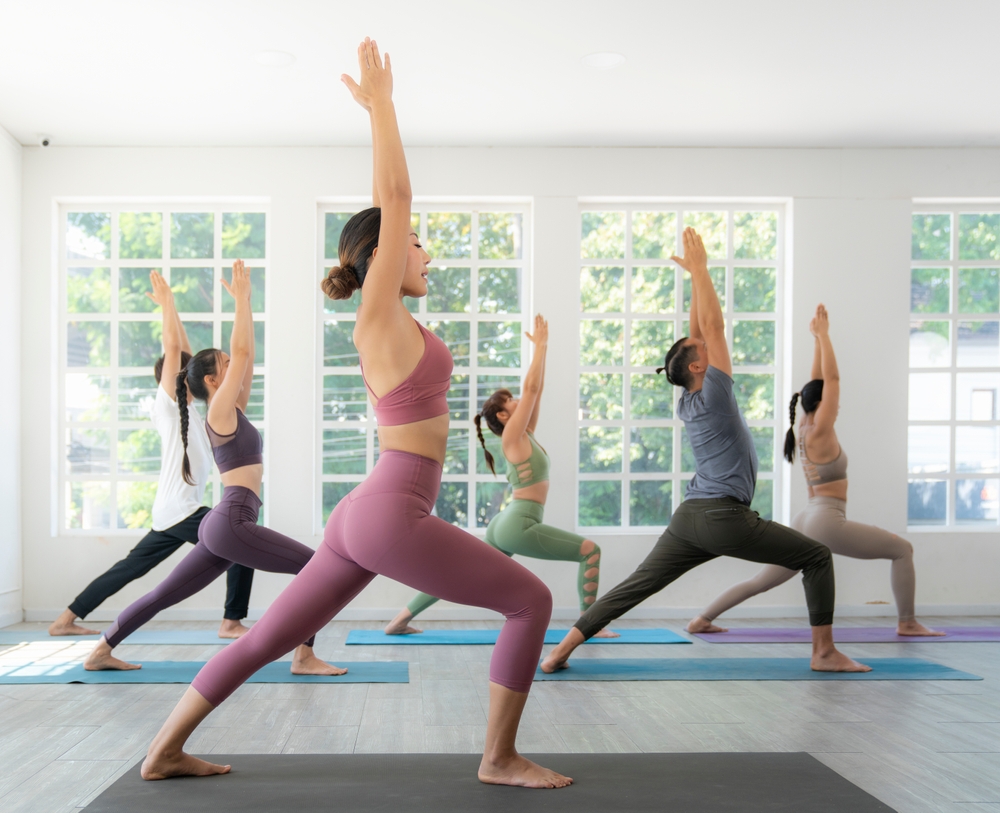
For those who never heard of it, yin yoga uses traditional yoga poses but holds them for an extended period of time to stretch inner connective tissue such as ligaments, fascia, and tendons. These types of stretches are said to improve flexibility and range of motion and restore mobility to deep tissue networks in the body. The slow movements and motionless holds, combined with meditation, are believed to encourage a deep relaxation response by quieting the nervous system.
Although a person can achieve these benefits with other, non-yoga, forms of stretching and prayer, yin yoga finds its basis in ancient Chinese rather than Hindu philosophies that also run counter to the Christian worldview.
As this site explains, “Yin yoga is based on the Taoist concept of yin and yang, opposite and complementary principles in nature. Yin is the stable, unmoving, hidden aspect of things; yang is the changing, moving, revealing aspect. In the body, the relatively stiff connective tissues (tendons, ligaments, fascia) are yin, while the more mobile and pliable muscles and blood are yang.”
This reliance on a Taoist energy philosophy (Qi, Meridians, and Yin/Yang balances) is part of a pantheistic belief system based in the idea that everything in the universe is interconnected as one divine energy source. Notwithstanding the fact that there has never been any scientific proof of the existence of this energy, it runs counter to Catholicism, which is monotheistic and teaches that God is a person, not an energy force. In the Eastern worldview, the intent of meditation is to achieve an altered state which can enable the practitioner to gain enlightenment about their inner divinity.
As this practitioner explains, some of the benefits of yin yogi with its accompanying meditation is to “connect with their inner selves” in order to achieve a greater sense of inner peace and clarity. Holding poses is said to release emotional blockages and cultivate self-love, allowing for a greater sense of self-acceptance. It also helps to cultivate a sense of interconnectedness with the earth and the natural world.
“Yin yoga is a powerful tool for spiritual growth and self-discovery,” the site concludes. “Its ability to promote inner peace, emotional healing, and a sense of interconnectedness makes it a valuable practice for anyone seeking greater spiritual wellbeing.”
Just like all other forms of yoga, yin yoga is not just exercise. According to practitioners, it has a spiritual component that matters because it is intrinsic to the practice.
As the Indian Ministry of External Affairs says, “Yoga is essentially a spiritual discipline based on an extremely subtle science which focuses on bringing harmony between mind and body. . . . The practice of yoga leads to the union of individual consciousness with that of the Universal Consciousness.”
The goal of eastern meditative techniques is to achieve inner enlightenment or inner peace by mastering techniques, manipulating supposed spiritual energies, and finding one’s “own center.” This goal is diametrically opposed to the Christian concept that salvation and true peace are free gifts of divine grace through Jesus Christ which cannot be achieved by any human method or physical technique.
© All Rights Reserved, Living His Life Abundantly®/Women of Grace® http://www.womenofgrace.com
Send your New Age questions to newage@womenofgrace.com